#5 Reporter's Privilege

If you look up the definition of "reporter's privilege", it describes it as reporters being protected from being forced to reveal information or their sources after they were sworn to keep it private. When a source reveals information to a reporter, they both come up with an agreement on the confidentiality of the situation. Each state usually has its own laws about reporter's privilege.
In 2001, one of the first cases regarding reporter's privilege was a journalist who was sent to jail for refusing to come forth with her sources about an article she had written a book about a Houston murder. She was ordered a subpoena which she refused to respond to and this was not a smart decision. She spent time in jail longer than any other journalist at the time. After she was released from jail, she informed the jury that if she was subpoenaed again she would go back to jail. She fought the case saying "If that's what it takes, that's what it takes. This is not so much about me. It's about the public's right to free and independent press."
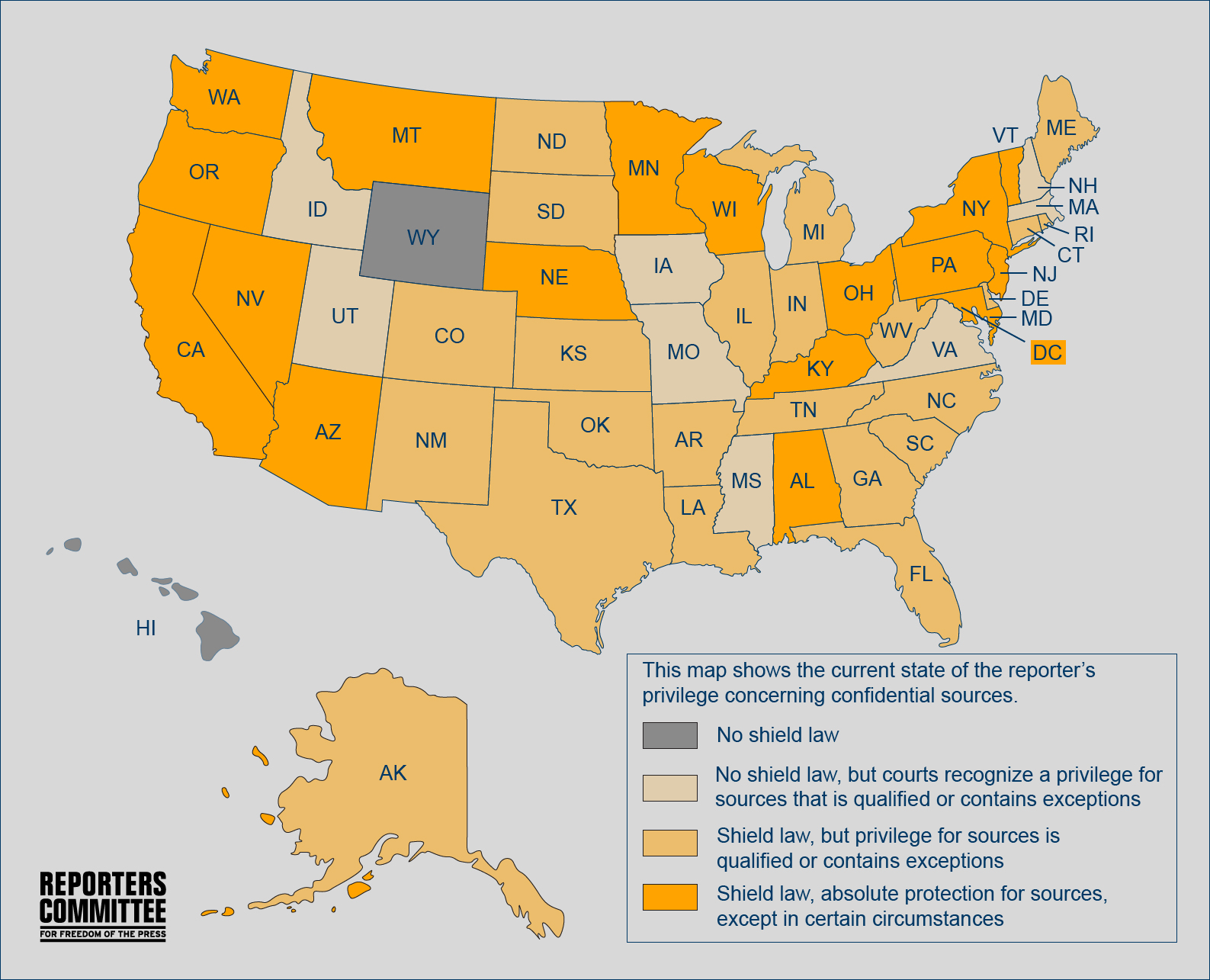
Shield laws are laws that protect witnesses and reporters from having to reveal confidential information. Currently, thirty-nine states have put the shield law in place for their journalist to be protected. Arkansas, for example, provides shield laws for their journalist and sources. So that no information is misunderstood, they confirm that "Before any editor, reporter, or other writer for any newspaper, periodical, radio station, television station, or internet news source, or publisher of any newspaper, periodical, or internet news source, or manager or owner of any radio station shall be required to disclose to any grand jury or to any other authority the source of information used as the basis for any article he or she may have written, published, or broadcast in bad faith, with malice, and not in the interest of public welfare."
In a case in Washington D.C., the reporter, Michael Isikoff, released information that was supposed to be kept confidential. Isikoff along with Newsweek was sued by his source Julie Steele for revealing the information about President Clinton allegedly touching Kathleen Willey inappropriately. The information that Steele had given to Isikoff was supposed to stay in private according to their agreement but Isikoff failed to keep up his end of the deal and revealed her name as a source in his report. Turns out in the end, Steele was lying about her accusations and the case became a jumbled mess the federal judge dismissed it because Isikoff and Steele could not provide a confirmation of their agreement and Steele lied in her report.

Comments
Post a Comment