Ethics and False Advertising
When it comes to advertising there are many different ways you can go about it. Ethical advertising is the way you communicate with your customers when trying to sell them a product. You have to make sure you dot every I and cross every T without leaving out or hiding any information about your product.
Have you ever gone to buy an item or sign up for a subscription that seemed like a good deal but then the further you got into it the process, the more the company piled onto the cost? When selling a product, the best thing to do is lay everything out on the line and not hide information that will surprise the customer.

Let's get into some examples, First, weight loss products. It would be nice if every fact that weight loss companies tell you were true. For example, "Take this pill and watch the weight just fall off." or "This requires no exercise, just use our product and you will lose that stubborn fat." These companies use false promises to get you to buy into their company. Weight loss companies will advertise fake weight loss stories on their websites or on personal blogs of the influencers that work for the company. You also have to watch out for examples where people use clothes that they "don't fit in anymore" but are actually clothes that they purchased two sizes too big for pictures to say they grew out of.

Steroids are another product you have to watch out for. Yes, in most circumstances steroids help with muscle development but there are many side effects that come with taking steroids that people don't talk about. Steroids cause your muscles to grow and develop at a fast-growing rate and are normally used in a sport setting to help you improve faster than other athletes. In most cases, steroid use is illegal among college athletes but they are also used in the weight room and for weight lifting competitions. Achieving the physique comes with consequences that people like to put on the back burner. For example, steroids can lead to increased appetite, changes in mood, blurred vision, acne, increased growth in body hair, bruising easily, diabetes, high blood pressure, trouble sleeping, cataracts, and the list goes on. If you are to choose to get on steroids it is important to stick to the facts and not the
fantasy of the steroids.

Another falsely advertised product is
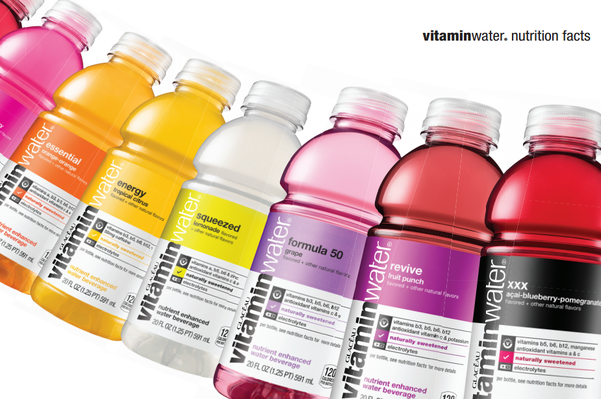
VitamimWater. This specific product is owned by Coca-Cola which claims to be good for you and filled with vitamins that you need in water. VitaminWater has different targeting drinks for whatever your needs are such as endurance, essential, refresh, and focus. This company also claims that it is all-natural colors and flavors. What this company doesn't tell you is that one vitamin water contains just as much sugar as your everyday soda. Along with sugar, VitaminWater also contains a high concentration of fructose which also leads to health problems if over-consumed.
Healthline claimed that "One bottle of Vitaminwater packs 120 calories and 32 grams of sugar, In the US, where it is sweetened with crystalline fructose, it contains just as much fructose as a regular coke."
When it comes to the
beauty side of advertising, you will also come across a lot of ethics that companies like to skip over. Companies will post false advertisement photos of ladies in their fifties using a wrinkle cream that made them look twenty years younger but in reality, they just used photoshop in order to make the women appear younger to get you to purchase their product. Although these are popular influences that we all adore, they are not always as they seem to be.
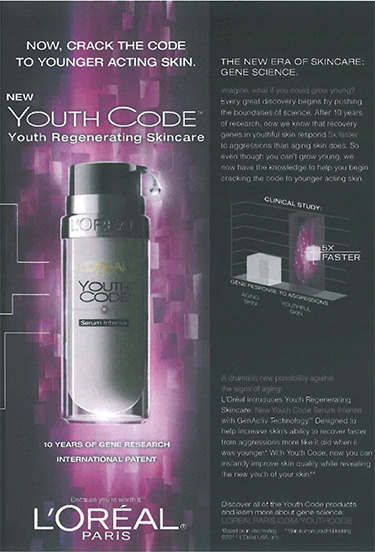
In 2014, L'Oreal had charges about a product they released that was
"Youth Generating Skincare" that claimed you would have noticeable differences in just seven days. They claimed that this product could alter genes that would make your skin younger and that this product was "clinically proven" to do so.
Skincare products make claims all the time with their customers that the products they are selling are
"anti-aging", but are they actually? Can you really stop someone's skin from aging? Well, the answer is no if you really had to think about it. Yes, there are products out there that can help with your wrinkles and make your skin appear to look younger but let's face it, no one is getting any younger.
These days it is hard to be one-hundred percent sure if the products you are using are what they are hyped up to be. Even after doing your own research about companies you are potentially going to buy from, you still may be fooled by the information that they are not sharing with you about every single ingredient along with the side effects of their products.


Comments
Post a Comment